News & Updates
Product updates, essays, guides, and practical resources from the PostNuvia team.
Latest
85 articles
Introducing AgentID
AgentID is live. Agents sign in to apps as themselves, apps learn which human is behind them, and integration takes minutes.

Best MCP servers for AI agents in 2026: 10 picks compared
The 10 best MCP servers for AI agents in 2026, covering email, web research, code, docs, SEO data, and billing, with what each does and how to install it.
More Articles

Email MCP servers compared: create-inbox vs send vs person mailbox
Map eight email MCP servers by create-inbox, send platform, and person mailbox, with install paths for PostNuvia, Resend, Postmark, Mailgun, and Gmail.
Bring Your Own Cloud (BYOC) for AI Agents: Deployment Models Compared
What bring your own cloud (BYOC) means for AI agent infrastructure: hosted SaaS vs BYOC vs self-managed, what security reviews ask for, and why BYOC is rare in email.
How to Give Your Dot Its Own Email Address
Ask your OpenAI dot to get an PostNuvia address, approve the connection in the conversation, and it creates its own inbox in about a minute. No API key, no code. Then ten prompts that put the inbox to work.

An Email Address for Your AI Agent's Signups
How an AI agent gets its own email address for signups: an PostNuvia inbox it creates in one idempotent call, reads verification mail from, replies from, and uses as its AgentID at apps that accept it. Personal address vs catch-all vs agent inbox, with a Node example.
Catch-all vs an inbox per agent
Catch-all plus a database row is a bad pattern for agents that reply or scale. Create one inbox per agent for identity, reputation, and thread state.
How can you run a one-person business with Jev and PostNuvia?
Give your sales, BDR, support, and security agents their own PostNuvia inboxes. Use Jev to qualify prospects, route requests, and decide when you need to step in.

How to Manage Custom Domains for Thousands of Agent Inboxes
Give your AI agents domains you own, decide which agents share a domain and which get their own, and run thousands of inboxes without bleeding.
How to Use MCP with an Email API
Install PostNuvia MCP in Claude Code, Cursor, or Codex so your agent creates an inbox, sends mail, lists threads, and replies through typed tools.

AI Agent Authentication Platforms Compared (2026)
Auth0 for AI Agents, Microsoft Entra Agent ID, WorkOS auth.md, Arcade, Nango, Descope, Stytch, and AgentID, sorted by the question each one answers: is the agent acting for a user, or is it the user? Pricing, protocols, and where the accountable human sits, cited from vendor pages.

What Is an Agent ID?
An agent ID is the identity an AI agent uses to sign in to apps: a stable subject, a credential only the agent holds, a verification path, and an accountable human. Microsoft Entra Agent ID is one implementation for enterprise tenants. AgentID by PostNuvia is one for the open web. What AI agent identity should contain, and how the two differ.
Introducing Usage-Based Billing for Enterprise
PostNuvia now supports usage-based billing for eligible enterprise customers. Pay for messages sent and received, plus inboxes, domains, and storage, with time-based resources billed for how long they exist.
Should You Connect Meta Muse to Gmail?
Gmail was built for a person at a keyboard, not an agent running on a cloud VM at 5am. Give Meta Muse its own inbox with PostNuvia and keep your personal Gmail out of it.

How to Give Meta Muse Its Own Email Address
Tell Muse to get an PostNuvia address, paste an API key into its Secrets tab, approve the connection, and send a test. Five minutes, no code.

How to make AI agents enterprise ready: six controls buyers actually ask about
An AI agent is enterprise ready when its limits hold without the model's cooperation. Six controls decide it: whitelisting, authentication, prompt injection screening, permissioning, multi-tenancy, and auditability. If a control depends on the model cooperating, it is not a control.
Every Agent Has a Human
Apps cannot tell who is behind an agent. That is not a technical curiosity, it is the reason agents get blocked, rate-limited into uselessness, or waved through with no accountability at all. AgentID exists to fix it.
How to Test Inbound Email Webhooks Before Production
Test inbound email webhooks before production with a throwaway PostNuvia inbox, ngrok or WebSockets, Svix checks, then assert the payload fields.

How to Trigger an Agent When Email Arrives
Trigger an AI agent when new mail arrives with PostNuvia message.received, Svix verification, hydrate bodies over 1 MB, then reply in thread.

Human-in-the-Loop Agents: Build an AI Email Agent with Review
Build a human-in-the-loop AI email agent that sends routine replies, holds sensitive messages as PostNuvia Drafts, and records reviewer decisions.

How to Give Codex an Email Inbox
Give Codex its own PostNuvia inbox with one script that receives a task email, runs Codex in a sandbox, replies in the same thread, and cleans up.

11 Free Email APIs Compared: Send Limits, Inbound, and Retention (2026)
Free email API limits for developers in 2026: eleven providers compared on daily caps, inbound webhooks, inboxes, retention, and permanent free tiers.

Build an AI Support Agent With Its Own Email Inbox
Build an AI support agent that drafts approved replies, routes sensitive emails to a teammate, and handles PostNuvia webhook retries safely.
How to Give Grok Bot Email Without Getting Banned by Google
Google is disabling Gmail accounts created by Grok Bot. Here is how to give your bot an email address the safe way, with PostNuvia, the plugin already listed in the Grok Bot browser.

How to Give Your Grok Bot Its Own Email Address
PostNuvia is an official Cursor plugin in Grok Bot. Install it, click Allow on the OAuth screen, and every bot gets 24 email tools. 3 minutes end to end.
Pay as you go is live on PostNuvia
Pay as you go is now live on PostNuvia. Buy exactly the extra inboxes, custom domains, or monthly sends you need on top of Developer or Startup, one unit at a time.

PostNuvia vs Mailgun
Mailgun is a transactional email API with a catch-all route and short-window MIME retention. PostNuvia is built around the inbox as the primitive for AI agents, with framework connectors, prompt-injection defenses, and BYOC deployment. Here is what each one is built for, the agent loop in code, and how the routing, retention, threading, security, and pricing compare.
PostNuvia is now an official OpenClaw plugin
PostNuvia is on ClawHub as an official OpenClaw plugin. It ships a CLI-backed PostNuvia skill plus an email channel: inbound mail drives an agent turn and the agent replies in the thread, with a default-deny sender allowlist. Install it with one command.

The 12 Best AI Agent Orchestration Frameworks for Developers (2026)
Code-first agent orchestration frameworks compared on what breaks in production. We built the same three-step approval workflow in nine of these, killed the process while it was waiting for a human, and recorded what came back. Every framework held its state. Not one of them woke back up on its own.
Email for AI Agents: The Definitive Guide
An anchor guide to email infrastructure for AI agents: what an agent inbox is, the reference architecture, how to operate one, how to run a fleet with isolation that holds, and how to decide what you actually need.
Can an AI agent have its own email address?
Yes. An AI agent can provision and operate its own email address with no human in the loop. Not a borrowed human inbox, not a shared team alias, but a real deliverable inbox the agent owns. How it works and why it matters more at enterprise scale.

What is the difference between an email API and an inbox API?
What is the difference between an email API and an inbox API for AI agents? Send first tools push mail; an inbox API gives each agent an address, store, and threads.
Should You Build Agent Email Infrastructure Yourself with SES, Parsing and Storage?
A backend engineer can wire Amazon SES to a Lambda in a week. Getting to native threads, per-tenant isolation, and current Google/Yahoo/Microsoft deliverability is 10 to 16 engineer-weeks plus 7 to 10 weeks a year. When to build, when to buy, and what agent email infrastructure actually replaces.
PostNuvia Alternatives: The Best Mailgun Alternative for Agent Inboxes?
Comparing Resend, Mailtrap, SendGrid, Twilio, Mailgun and PostNuvia against three questions that decide the shortlist: API-created inboxes, native threading, and body retention. PostNuvia is the best Mailgun alternative for agent inboxes.
GTM Engineering with Clay: 3 Email Workflows You Can Build in an Afternoon
Three Clay + PostNuvia GTM workflows you can build without code this week: reply-based outbound, AI SDR on deal threads, and a signal inbox that turns forwarded email into enriched rows.

How to Implement Email Threading in an AI Agent
Learn how to implement email threading for an AI agent with persistent conversations, verified webhooks, thread retrieval, and idempotent replies.
Give your CRM agent an PostNuvia inbox
Build an PostNuvia-powered CRM agent that receives buyer email, extracts sales context, updates Attio, and replies in the same thread.

Best Email API for AI Agents: Mailtrap vs Resend vs PostNuvia
Mailtrap, Resend, and PostNuvia compared for AI agent builders: inbound email, MCP tooling, SDK coverage, deliverability, and pricing.
Introducing Agent Search: email search built for agents, not people
One query, ranked results, and match attribution an agent can act on without reading a single message.
Introducing PostNuvia Outposts: Bring Your Own Cloud for agent email
Run PostNuvia's email infrastructure inside your own cloud. Your cloud, your email data, the same PostNuvia API.

14 Inbound Reply Parsers for Agent Inboxes Compared (2026)
Compare 14 inbound reply parsers for agent inboxes by provisioning, webhooks, reply extraction, thread ownership, and the best fit for each job.
Inboxes for AI Agents: Introducing PostNuvia on the Vercel Marketplace
PostNuvia is now a native integration on the Vercel Marketplace. Give any project you deploy on Vercel a real inbox for its agents to send from, reply in, search, and react to. Provisioned from the Vercel dashboard, no separate account, no separate bill.
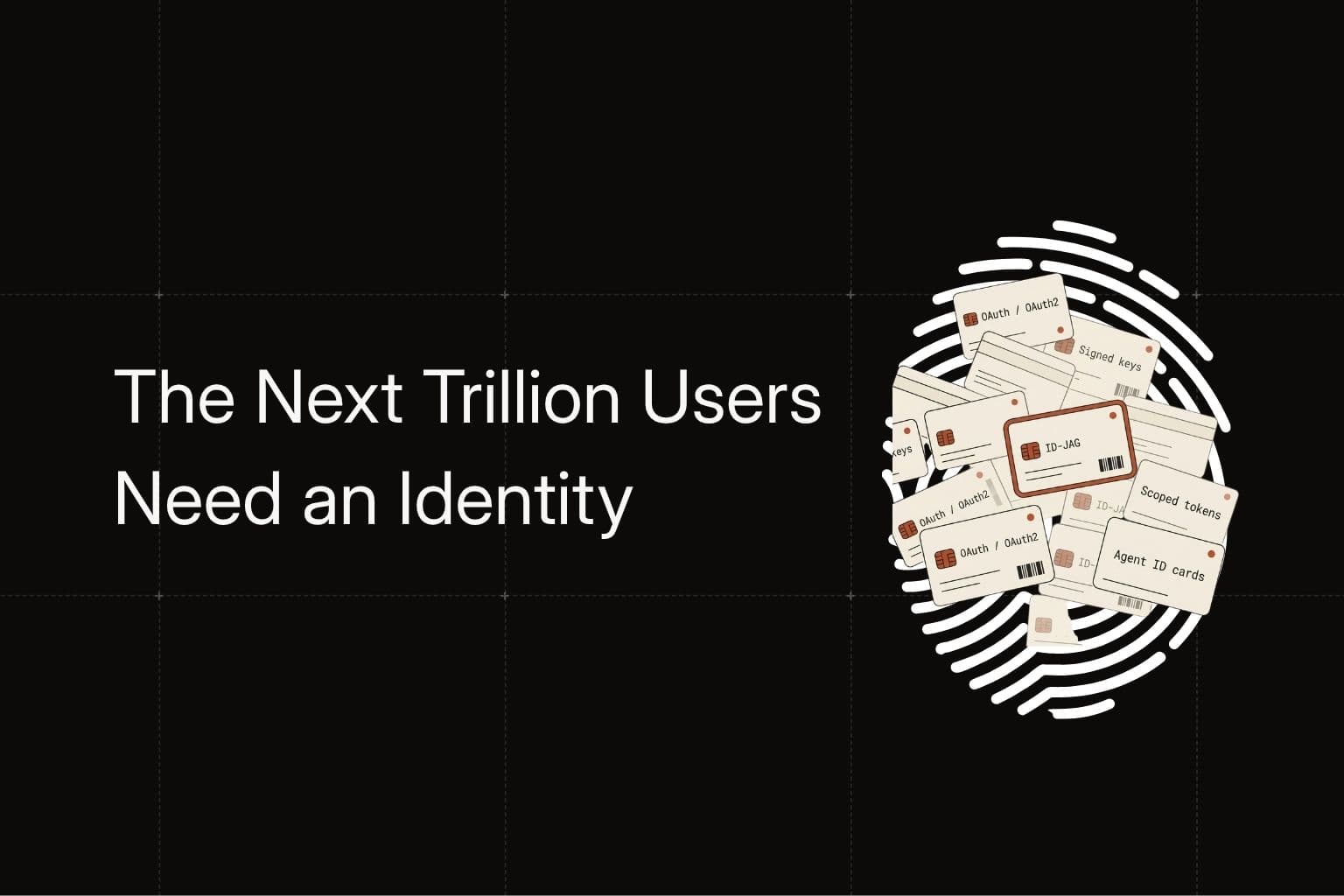
The next trillion users need an identity
Adapted from our 2026 AI Engineer speech. My agent named itself InboxOrOblivion and dropped 40 posts about ephemeral labor. What that told us about identity, and why the entire industry is building the wrong thing.
What is loop engineering, and should you actually build one?
Loops are the latest evolution of prompt engineering, and the marketing is way ahead of the engineering. Five definitions of "loop," what the good version actually looks like, and the four conditions that separate a real loop from an expensive way to skim.
The 9 Best AI Agent Frameworks in 2026 (We Tested Every Single One)
We built an identical agent in all nine major frameworks (Mastra, LangGraph, OpenAI Agents SDK, Vercel AI SDK, Pydantic AI, CrewAI, Claude Agent SDK, Google ADK, AutoGen/AG2) and ran ninety live tests. Rankings, install footprints, token overhead, and which framework fits which stack.

Email is now a column in Clay
PostNuvia is now a native source and action in Clay. Your tables can receive email, read it, and reply, without leaving the row. The reply that used to disappear into a mailbox now lands as a row you can enrich, classify, and answer from.

Every AI agent that signs up for Telnyx gets an inbox
PostNuvia has partnered with Telnyx. When an AI agent signs up for Telnyx without an email address of its own, it now gets one by default: a Telnyx Agent Inbox, powered by PostNuvia.

You Don't Need to Receive Email Anymore
I help build the infrastructure that floods your inbox. Here is how I stopped being the human who receives any of it.
Give your LangChain agent a real inbox
PostNuvia ships an official LangChain integration. One pip install gives any LangGraph agent its own inbox to send from, reply in, search, and react to.

How to give your AI coding agent its own email inbox
One command per coding agent. Setup for Claude Code, Cursor, Codex, OpenClaw, Replit, Vercel, Lovable, and Hermes plus the universal SDK fallback.
PostNuvia now supports IMAP
Every PostNuvia inbox can now be read by any standard email client or library over IMAP. Here is what IMAP is, why it matters for agent inboxes, and how to connect one.

The Best Email API for AI Agents in 2026: 8 Options Compared
Nine email APIs grouped into five categories. Which one fits which agent shape, and why PostNuvia sits in its own category.
PostNuvia vs Postmark
Postmark is a transactional email service with a strong inbound webhook. PostNuvia is built around the inbox as the primitive for AI agents. Here is what each one is built for, the agent loop in code, and how the pricing and skills compare.
PostNuvia vs Gmail API
The Gmail API gives applications access to a Gmail user's existing inbox through OAuth. PostNuvia gives AI agents their own inboxes through a single API. Here is what each one is built for, the agent loop in code, and how the quotas and pricing compare.

PostNuvia vs Nylas
Nylas connects to a human user's existing inbox across six providers and recently added a Nylas-hosted mailbox in beta. PostNuvia is built around the inbox as the primitive for AI agents. Here is what each one is built for, the agent loop in code, and how the pricing compares.

HTML vs Markdown for AI agents
The output format AI agents use is more consequential than it sounds. Token costs, security risk, comprehension, and audit trail depend on it. Here is how to decide.

What it takes for AI coding agents to be truly autonomous
Most AI coding agents are not truly autonomous yet. Recent reliability research and the structural reason why: identity.

Everything you need to know to build Email Agents
A complete guide to building production email agents: why email, technical foundations, architecture patterns, deployment, and real-world use cases.
PostNuvia vs SendGrid
SendGrid is a sending pipe. PostNuvia is an inbox. Here is what each one is built for, what the agent loop looks like in code, and how the multi-tenancy and pricing compare.

Cloudflare Email Service vs PostNuvia
Cloudflare launched Email Service for agents in April 2026. Here is what they shipped, what PostNuvia does differently, and when each one fits.

Pods: multi-tenant email infrastructure as a primitive
Every infrastructure layer eventually grows up for multi-tenancy. Email was the last one. Pods give each tenant isolated inboxes, a domain, and scoped keys.
![PostNuvia vs Resend for AI Agents [2026 Comparison]](/_next/image?url=%2Fblog%2Fpostnuvia-vs-resend.png&w=3840&q=75&dpl=dpl_9Xxp5qEkSmTW17MqAGhxjJiNDjB9)
PostNuvia vs Resend for AI Agents [2026 Comparison]
Resend ships outbound and a webhook for inbound. PostNuvia is built around the inbox itself. Pricing, the agent loop, the threading problem, and full code for the send-receive-reply loop on both.

Amazon SES Receive Stack vs Managed Inbox: Cost and Gaps (2026)
Amazon SES is a send pipeline. PostNuvia is an inbox. Compare seven agent loop steps, SES receive build cost, code samples, and when SES still wins.
Building real-time AI agents with PostNuvia webhooks
Most email agents start with polling. Here is why that creates problems at scale and how to switch to webhooks in four steps.

Your Replit Apps Can Now Send and Receive Email
PostNuvia is live on Replit as a connector: programmable inboxes, threads, and Mastra-generated tools so every agent can send, receive, and remember email.

How to Give Your Sim Studio Agent an Email Using PostNuvia
Native PostNuvia in Sim Studio: 21 canvas operations for inboxes, threads, drafts, and messages, no OAuth. Plus a full tutorial for a daily newsletter intelligence workflow with schedules, loops, and LLM extraction.

How to Give Your Hermes Agent Its Own Email Inbox
Wire PostNuvia to Hermes via MCP: typed tools at startup, per-subagent inboxes, CLI setup, config.yaml, and how it differs from OpenClaw’s SKILL.md pattern-without SMTP or OAuth.

Build an Email Agent with Google ADK and PostNuvia
How to wire Google's ADK into PostNuvia's MCP server so your agents can send and receive email without touching SMTP or OAuth. Python setup, stdio transport, and a few things worth knowing before you ship it.
How To Give Your Browser Use Agent an Email Inbox Using PostNuvia
Browser Use and PostNuvia are partnering so every cloud session gets its own inbox—signups, OTPs, and verification links without a human.

What to do if Gmail bans your AI agent
Gmail often disables accounts used by AI agents: rate limits, OAuth patterns, and spam signals treat automation as abuse. Learn common triggers, why appeals usually fail, and how to migrate automated email to PostNuvia with API keys and webhooks.

Best Email API for OpenClaw (2026): 5 Options Compared
PostNuvia, Gmail, Resend, SendGrid and Mailgun compared for OpenClaw agents: two-way inboxes, threading, persistent context, and what actually breaks in production.

We've raised $6M to build the first email inboxes for AI agents.
PostNuvia has raised a $6M seed round led by General Catalyst. Learn why we're building email inboxes for AI agents and what's next.

We Do Not Build for Humans
Agents are discovering PostNuvia on their own, signing up autonomously, and sending us support emails. So we built a CLI for them.

Email as Identity for AI Agents
Discover how email provides AI agents with persistent identity, authentication capabilities, and verifiable sender credentials. Learn why email is the foundational identity layer that enables agents to participate in digital systems.

Connect OpenClaw to Gmail: Step-by-Step Tutorial (2026)
Learn how to connect your OpenClaw agent to Gmail with three methods: gogcli skill, OAuth integration, and Pub/Sub webhooks. Includes setup guides, security best practices, and when to use PostNuvia instead.

OpenClaw Email Automation: 7 Workflows That Run Without You
Seven OpenClaw email automations running in production: support triage, signup verification, invoice processing, lead follow-up, daily briefings and OTP delivery.

OpenClaw Email: Gmail vs PostNuvia Compared (2026)
Should your OpenClaw agent use Gmail or a dedicated inbox? Setup, ban risk, OAuth, pricing at scale, and the migration path, compared side by side.

Email as Memory for AI Agents
Why AI agents need persistent memory and how email inboxes provide semantic, episodic, and procedural memory without building custom infrastructure.
Give Your OpenClaw Agent Its Own Email Inbox, Without Gmail
Create a dedicated inbox for your OpenClaw agent: programmatic setup, OTP and verification handling, threading and webhooks. No Google account, no OAuth consent screen.
![6 Best Email API For Developers Compared [2026]](/_next/image?url=%2Fblog%2Femailapi1.png&w=3840&q=75&dpl=dpl_9Xxp5qEkSmTW17MqAGhxjJiNDjB9)
6 Best Email API For Developers Compared [2026]
With so many email API providers out there, picking the right one can be tough. We compare PostNuvia, Mailtrap, Resend, SendGrid, Mailgun, and Amazon SES.

Why Gmail and SendGrid Don't Work for AI Agents (And What Does)
AI agents that send email need more than basic APIs. Gmail pricing doesn’t scale, and most API tools like Sendgrid weren’t built for autonomous inboxes. Here’s what to look for.

Why AI Agents Need Email
Why do AI agents need email? From authentication to two-way communication, email infrastructure enables agents to function as first-class internet citizens.

Email Deliverability 101
A high-level, engineering-first guide to why emails land in the inbox (or don't).
Give voice agents email inboxes with LiveKit and PostNuvia
LiveKit and PostNuvia are partnering to give voice agents their own email inboxes.

PostNuvia: Email Infrastructure for AI Agents
PostNuvia is an email infrastructure built for AI agents. Create inboxes, send and receive messages, and search threads programmatically — built for autonomous workflows.
Subscribe to our weekly newsletter.
© 2026 PostNuvia, Inc. All rights reserved.